
Key Takeaways
- Most eye exams take 20 to 60 minutes, depending on your needs.
- Routine visits typically move faster, while first visits can run longer.
- Dilation adds about 30 minutes, and contact lens fittings can add 15 to 30 minutes.
- Bring your current glasses and contact lens prescriptions, and a list of medications.
- Plan a ride home and bring sunglasses if your eyes are being dilated.
You have things to do today, and spending two hours at the eye doctor is likely not on your vision board.
The good news? Most comprehensive eye exams at Eye.Q. Optometry take anywhere from 20 to 60 minutes.
If you are a returning patient dropping in for a routine checkup, you can typically plan on being in and out in about half an hour. Visiting us for the first time? Give yourself a bit more breathing room. That initial appointment takes a little longer as we map out your medical history and run a comprehensive baseline set of tests to look after your long-term eye health.
If you are still unsure about where you may fall and looking for a more accurate time estimate, just give our team a call.
What Affects the Length of Your Visit
Several things can shift the clock. A first visit with an optometrist in Eagle Rock can run longer than a check-in you’ve done before. New symptoms, contact lens needs, or dilation can also all add minutes.
Your age and family history matter too. Kids and adults with a family history of eye conditions may need a few extra checks, which is time well spent.
How to Prep Before Your Appointment
A little prep helps keep things moving, including:
- Bringing your current glasses and contact lens prescriptions.
- Writing down your medications and any family eye history.
- Filling out intake forms before you arrive.
What Happens During an Eye Exam?
Every comprehensive eye exam is tailored to your unique visual needs, meaning your specific visit might look a little different. However, a typical appointment includes:
- A health and lifestyle discussion: Your appointment typically begins with a conversation about your medical history, daily screen habits, and any visual symptoms you have been noticing.
- Visual acuity testing: You will read the standard eye chart to measure how clearly you see things at various distances.
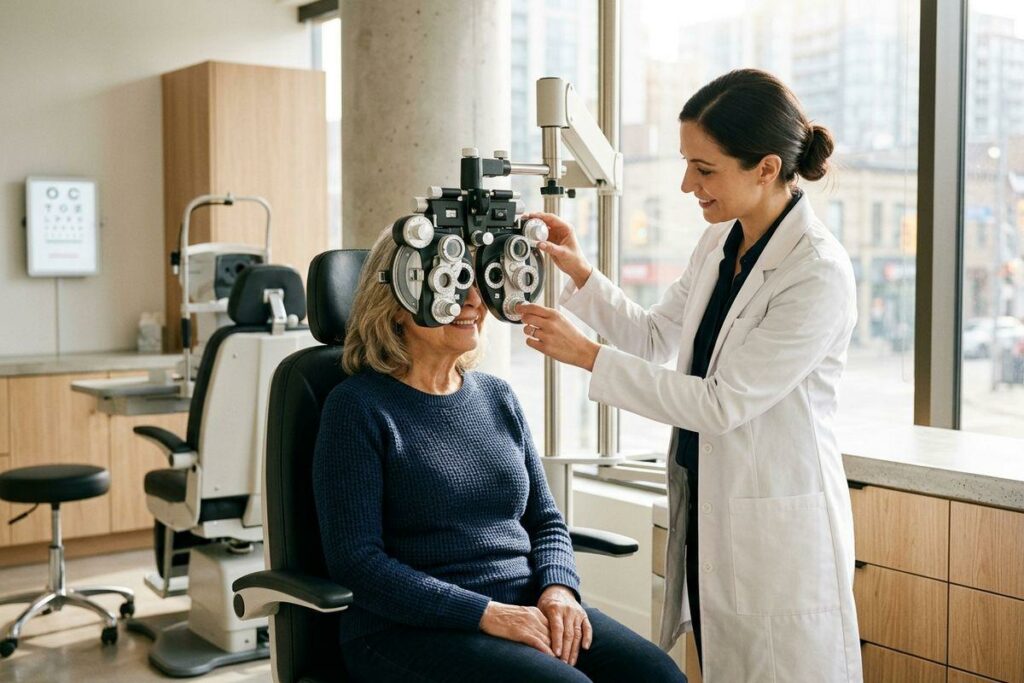
- The refraction assessment: Looking through a series of interchangeable lenses to compare views helps determine your precise prescription.
- Eye health and pressure checks: Your eye doctor evaluates internal eye pressure and examines the overall health of the tissue inside your eyes to screen for underlying conditions.
Pediatric Eye Exams
Children’s vision needs change rapidly as they grow, meaning pediatric eye exams involve evaluations tailored specifically to younger eyes.
School-age kids receive targeted checks to track common developmental conditions like myopia, which makes far-away objects look blurry. Identifying these shifts early allows your eye doctor to intervene proactively. If your child’s prescription continues to progress, ask our team about myopia management options designed to help slow the rate of change and support healthier long-term vision.
Assessing Strain and Comfort
Extended hours in front of digital screens can easily lead to tired, irritated, or watery eyes. To address this, your eye doctor may evaluate your tear film, the essential layer of moisture responsible for keeping the surface of your eye comfortable.
If your eyes consistently feel strained or dry by the afternoon, targeted dry eye therapies built around your daily screen habits can make a significant difference, helping you get through work-heavy days with greater comfort.
What Adds Time to Your Visit?
Two common add-ons can stretch your visit. Here’s what each one involves.
Dilation
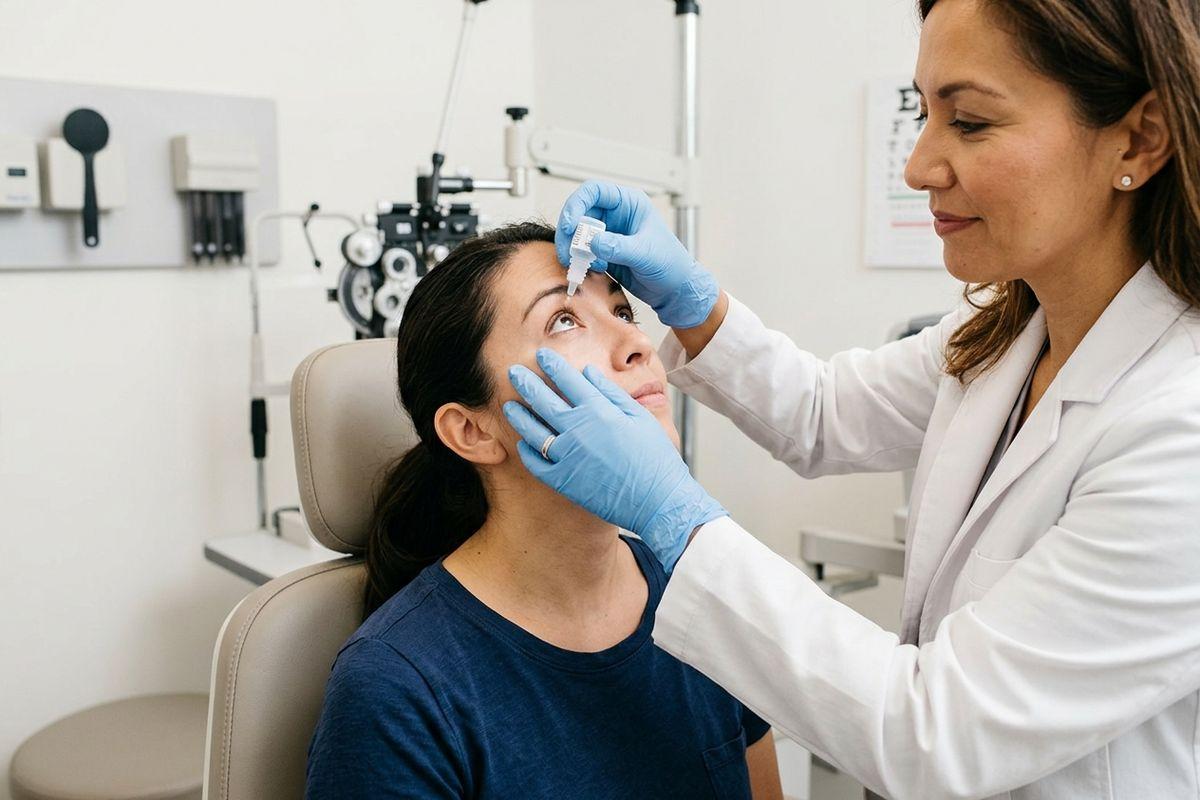
Dilation drops take about 30 minutes to widen your pupils. That wider window allows your eye doctor to see more of your retina and optic nerve, the parts at the back of your eye. In some cases, imaging can give a similar view without the drops.
Contact Lens Fitting
A contact lens fitting can add another 15 to 30 minutes. Your eye doctor measures your eyes and has you try on trial lenses to check the fit and comfort. If you’re new to contacts, you’ll also learn how to put them in and take them out before you leave.
What to Expect After Your Exam
If your eyes were dilated, expect blurry vision up close and some light sensitivity for a few hours. Bring sunglasses, and arrange a ride so you can relax on the way home. New glasses are often ready in about 7 to 10 days.
Come See Us
Ready to book? Our team at Eye.Q. Optometry in Eagle Rock can walk you through an exam that fits your family’s needs, from myopia checks to dry eye care. Schedule your visit today.