


Key Takeaways
- Dry eye often feels like stinging, grittiness, or a heavy, tired sensation.
- Watery eyes can be a sign of dry eye, not the opposite.
- Screen time, age, and dry air can play a role in your symptoms.
- Allergies, eyelid irritation, and contact lens discomfort can feel similar.
- Home habits and in-office therapies, like OptiLight intense pulsed light (IPL), can help you manage the discomfort.
Some days your eyes feel scratchy and tired long before lunch, and no amount of blinking clears them up. Eye.Q. Optometry in Eagle Rock hears about this often, and everyday habits usually play a part. When the discomfort keeps circling back, dry eye therapy can help you find steadier comfort.
Dry eye can feel like a mix of stinging, grittiness, and a tired heaviness that often comes from an unstable tear film.
What Does Dry Eye Feel Like Day to Day?
Your eyes might sting the moment you sit down at your desk. Or they feel scratchy, like a grain of sand slipped under your lid and refuses to leave.
Some days it shows up differently. Your eyes may feel heavy and tired, and they seem to want to stay shut by mid-afternoon. That worn-out feeling is one of the most common ways dry eye shows up.
Signs You Can See and Notice
Dry eye isn’t only about how your eyes feel. You can often spot it in the mirror too. Watch for:
- Redness or a bloodshot look
- Stringy mucus or crustiness along the lashes
- Watery eyes paired with blurry vision that clears when you blink
Why Watery Eyes Can Mean Dry Eye
It sounds backward, yet watery eyes and dry eye often go together. When the surface of your eye feels irritated, your body floods it with a wave of tears to soothe the discomfort.
Those extra tears drain away fast and don’t fix the deeper problem. The steady, oily layer that keeps your eyes comfortable stays unstable, so the watering keeps coming back.
What Leads to Dry Eye?
Plenty of everyday things can leave your eyes feeling parched. Screen-heavy days are a major culprit, as long hours staring at a laptop or monitor cut your natural blink rate almost in half. With fewer blinks, your tears evaporate before they can properly coat the surface of your eye, leaving desk and remote workers with eyes that feel dry, tight, and slow to focus by the end of the day.
Beyond screens, age and hormone shifts can change how many tears your body produces, and certain medications can dry things out as well. Your immediate environment plays a big role too. Think wind on a hike, smoke from a fire, or the dry air constantly blowing through a car vent.
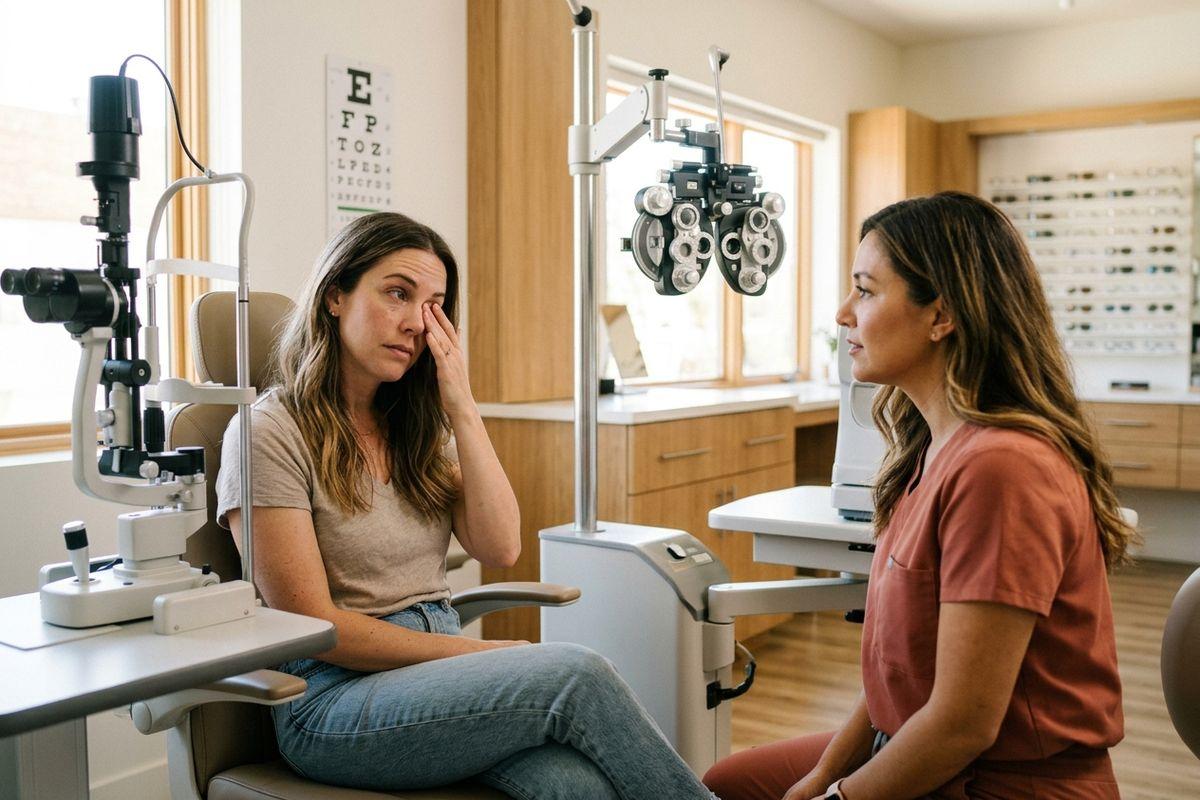
What Can Be Mistaken for Dry Eye?
A few other conditions can mimic these symptoms, making an in-person exam helpful.
Seasonal allergies can bring similar redness, though they typically feature a distinct itch, while contact lens discomfort can stem from an aging pair or a poor fit.
Sorting out which issue you are dealing with changes how you find relief, and an optometrist in Eagle Rock can look closely at your tear film and eyelids to point you in the right direction.
How to Find Relief in Los Angeles
You have real options, and many start at home. A warm compress across your closed eyes can loosen the oil in your glands so your tears spread more evenly.
A humidifier, regular eye breaks, and lubricating drops can take the edge off too. For symptoms that keep circling back, OptiLight intense pulsed light (IPL) therapy uses gentle pulses of light to calm inflammation around the eyelids and support steadier tears over time.
Small Changes That Help at Home
Small changes can make a big difference in your eye comfort. In your everyday life, try to:
- Add moisture to the air with a small humidifier near your desk.
- Take a screen break every 20 minutes and look at something far away.
- Lower your screen just below eye level so your lids cover more of your eyes.
When to Come See Our Team
Some dry eye symptoms clear up once you tweak your habits. Other times it lingers no matter what you try.
If your symptoms stick around for weeks, or they start getting in the way of work and reading, it’s worth booking a dry eye visit for a closer look.
Managing dry eye in Los Angeles gets easier with a plan built around your day and your eyes. Eye.Q. Optometry in Eagle Rock can help you sort out what’s behind your symptoms and find comfort that lasts. Book your dry eye visit today.